Can You Really Save a Life With First Aid? Here’s What Experts Say
Introduction
First aid is frequently practiced with the best of intentions. Even while we keep a box in our car or house in case we need it in the future, we hardly think about how useful it might be. The idea that first aid is merely a band-aid solution and cannot save lives is a common misconception. However, professionals and practical experience indicate differently.
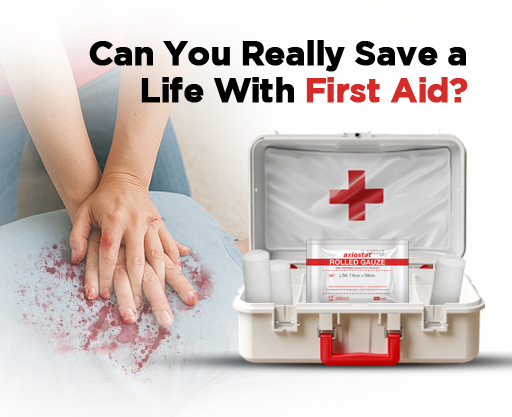
In trauma situations, first aid can be the first line of defense if it is given appropriately and quickly. Bystanders can purchase vital minutes before emergency personnel arrive by using basic knowledge and devices. Today, we examine how commonplace equipment like hemostatic dressing affects real-world situations and speak with experts who have witnessed their transformative power.
What Makes First Aid So Powerful?
There's a phrase in emergency medicine called the "Golden Hour." This is a reference to the first hour following a serious injury, when receiving medical care quickly can make the difference between survival and death.
During this window, even non-medical bystanders can make a critical impact. Scenarios like:
Severe bleeding after road accidents
Sudden cardiac arrest in public spaces
Choking in children or adults
In all of these cases, simple first aid measures can help preserve life until medical help arrives. Gaining basic skills like performing cardiopulmonary resuscitation or applying pressure to a wound might greatly increase one's odds.
Role of Hemostatic Dressing Products in Saving Lives
The concept of stopping bleeding with a bandage or cloth is one that most people are familiar with. But conventional gauze frequently fails in real-world trauma situations. Bandages made of hemostatic gauze can help with it.
Compared to standard materials, these advanced wound dressings can reduce serious bleeding more quickly. The body's natural coagulation process is accelerated by clot-enhancing chemicals found in products like Celox, QuikClot, and Axiostat.
Dressings based on chitosan, such as Axiostat Chitosan Hemostatic Gauze, are renowned for their low trauma during removal, rapid clotting, and antibacterial qualities. The patient has a significant advantage because these hemostatic dressing products can start working as soon as it is in contact with the wound or blood.
What Experts and Emergency Medics Say
Trauma surgeons and paramedics stress the value of bystander intervention time and again. "One of the top priorities in trauma care is controlling bleeding at the scene," says emergency physicians. The sooner it is dealt with, the better the result will be.
Both military and civilian field medics now keep hemostatic gauze bandages in their kits. Prompt application of chitosan dressings has been shown in case studies to significantly reduce mortality and blood loss. When compared to normal gauze, chitosan-based dressings shorten the time to clot.
Patients have an exponentially increased probability of survival if bleeding is stopped within the first three minutes. Having the appropriate resources is crucial during this life-or-death moment.
Real-Life Case Studies of First Aid Success
Road Accident Controlled with Axiostat
Prahladbhai, a 45-year-old man, sustained a severe head injury in a road accident and was rushed to Civil Hospital, Ahmedabad. To control the heavy bleeding, Axiostat was applied directly to the wound with firm pressure for two minutes, followed by bandaging to keep it dry and securely in place. The dressing was left undisturbed, allowing its hemostatic action to take effect. When removal was required, a simple saline application enabled the Axiostat to be taken off effortlessly, ensuring safe and effective wound management during the critical first-aid response.
Combat Soldier Saved with Hemostatic Dressing
Indian Army commandos had to deal with dangerous combat situations where every second mattered during the 2016 surgical strike mission. One soldier suffered severe injuries from a landmine blast at a crucial moment, causing significant bleeding. To stop the bleeding on the spot, the army's standard field kit's hemostatic dressing, Axiostat, was used right away. The soldier was stabilized by its quick clotting action, allowing for a safe evacuation for additional care. The dependability of cutting-edge bleeding control products like Axiostat in life-threatening combat situations is demonstrated by this practical use.
Why Everyone Should Learn First Aid
Medical professionals are not the only ones who can save lives. Every person should have at least the following essentials:
Use of CPR and AED
Control of bleeding, including the application of hemostatic gauze and tourniquets
Positions for airway control and recovery
Building a Life-Saving First Aid Kit
You should have more than just band-aids in your first aid pack. In order to be fully ready for emergencies, you should:
Throwaway gloves
Hemostatic gauze made of chitosan
Gauze rolls and pressure dressings
The tourniquet
CPR mask or face shield
Shears of trauma
Experts advise tailoring your kit to your surroundings, whether they are your house, vehicle, place of employment, or outdoor pursuits. Hemostatic dressings should always be seen as necessary, not optional.
Conclusion
First aid is not a contingency plan. Frontline defense is what it is.
Action in those early moments often determines whether a situation ends in tragedy or survival. Ordinary individuals can become heroes with the right training and equipment, such as hemostatic gauze bandage.
Be ready, assemble your kit, and learn first aid. Because being prepared saves lives in an emergency.
 A collaborative study with Harvard